新闻

RapAdmin

Yi and colleagues demonstrate that age-induced degradation of extracellular matrix generates elastin-derived fragments that activate the innate and adaptive immune system, which evokes systemic inflammaging.

A new Nature Aging study reports that fragments of elastin—the long-lived structural protein critical for arterial elasticity, lung compliance, and skin integrity—are not passive signs of tissue deterioration but active pro-aging signals. These elastin-derived peptides, or “elastokines,” increase with age and trigger a coordinated inflammatory cascade that accelerates metabolic decline, immune dysregulation, and multi-organ aging. Crucially, the paper also identifies a druggable node in this pathway: NEU1, an enzyme in the elastin receptor complex whose inhibition by the small molecule DANA extends lifespan when administered late in life.

The researchers found that circulating elastin fragments rise steadily in mice and humans across adulthood. To test causality, healthy mice were infused with elastin-derived peptides, including the key hexapeptide VGVAPG (“E-motif”). These peptides were sufficient to induce canonical aging phenotypes: increased fat mass, decreased lean mass, elevated IL-1 and IL-6, impaired physical function, and shortened lifespan. This establishes that elastin fragmentation is not merely correlated with aging but capable of driving systemic decline.

Mechanistic analysis showed that the fragments are sensed by monocytes and macrophages via a NEU1-containing elastin receptor complex. Activation of this pathway reprograms the innate immune system, which then reshapes adaptive immunity. Single-cell transcriptomics revealed expansion of IFN-γ–producing Th1 cells, cytotoxic-like CD4 T cells, and inflammatory CD8 subsets typical of “inflammaging.” Transferring these reprogrammed T cells into immunodeficient mice propagated the inflammatory-metabolic dysfunction, demonstrating that the immune system becomes a vector of elastin-fragment–induced aging.

The most notable translational finding comes from blocking NEU1. Administration of the neuraminidase inhibitor DANA in mice exposed to elastin fragments normalized inflammatory cytokines, restored metabolic parameters, reduced liver and kidney stress markers, and improved tissue histology. The intervention was then applied to naturally aging mice, starting in late life (around 60–65 weeks). Weekly DANA injections produced a significant extension of median lifespan—approximately 17% in males and 12% in females—along with measurable improvements in grip strength, endurance, locomotion, body composition, and reductions in p16-linked cellular senescence. These effects occurred without dietary manipulation and were observed in otherwise healthy wild-type animals, underscoring the therapeutic relevance of blocking this extracellular-matrix-to-immune signaling axis.

A combination arm pairing DANA with rapamycin demonstrated even greater survival benefits than either treatment alone. The synergy suggests that mitigating extracellular-matrix–derived inflammatory signaling (via NEU1 inhibition) and suppressing nutrient-sensing pathways (via mTOR modulation) act through complementary mechanisms and may represent a next-generation, multi-target longevity strategy.

Complementary experiments showed that senescent cells are major generators of elastin fragments through elevated elastase activity. Treating old mice with the senolytics dasatinib plus quercetin reduced circulating elastin fragments, reinforcing the view that senescence and ECM degradation are tightly coupled upstream drivers of age-related inflammation.

Human cross-sectional data from over 1,000 adults revealed that higher elastin fragments correlate with worse metabolic, renal, and cardiovascular markers and higher blood pressure at all ages. While observational, these patterns align with the mechanistic mouse data and suggest that elastin fragments may serve as biomarkers of biological aging.

Longevity Implications

This research identifies a previously underappreciated axis of systemic aging: elastin fragmentation → NEU1 activation → myeloid inflammation → T-cell remodeling → metabolic and organ decline. Protecting elastin integrity—through smoking avoidance, air-quality protection, tight blood-pressure control, metabolic optimization, periodontal care, structured exercise, and UV avoidance—may reduce upstream elastase activity. The late-life lifespan extension achieved through NEU1 inhibition is especially notable: it positions the extracellular matrix as a viable, druggable longevity target, potentially synergistic with established pathways such as mTOR and senescent-cell clearance.

Source Research Paper (Open Access): Elastin-derived extracellular matrix fragments drive aging through innate immune activation

相关:

RapAdmin

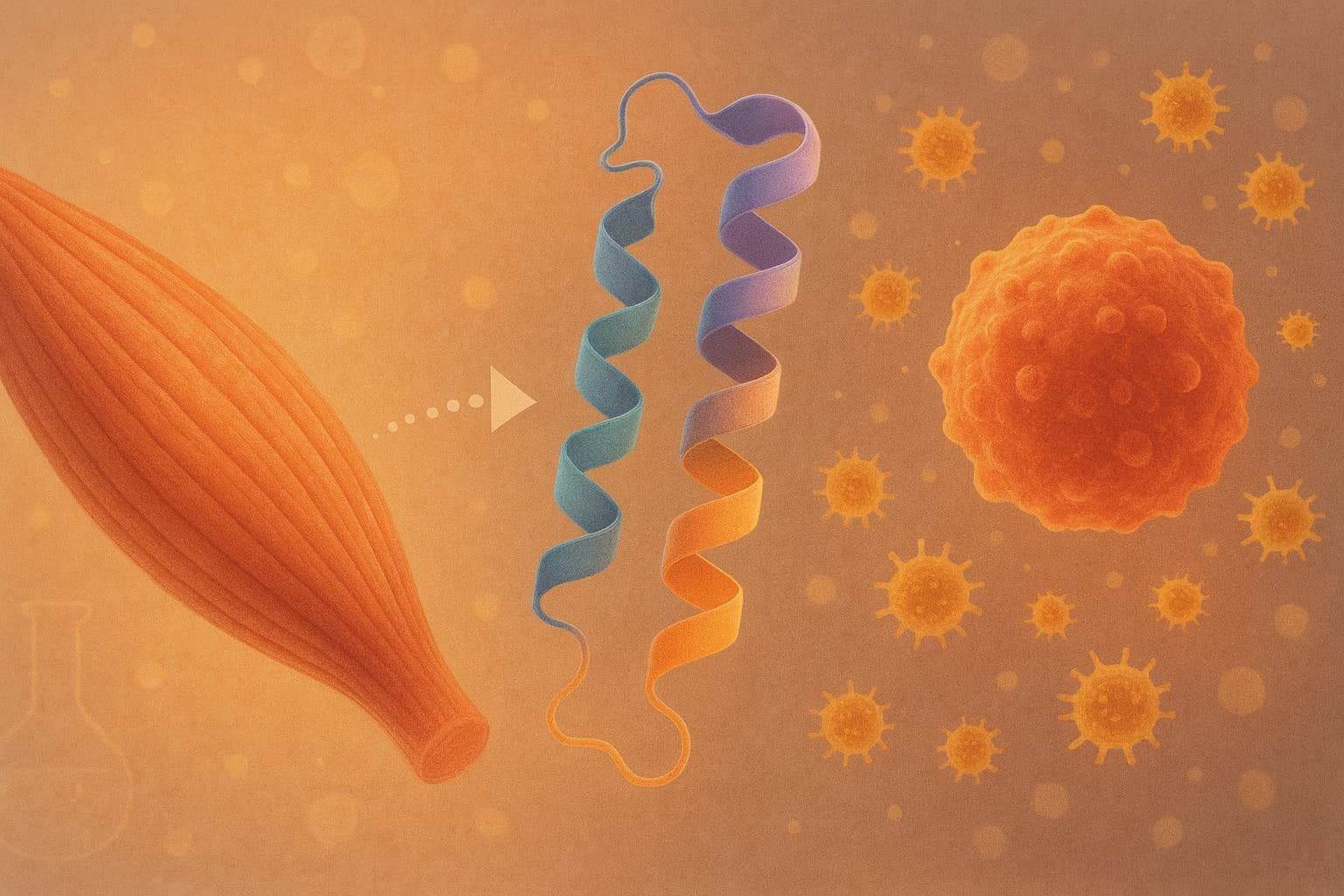
A new comprehensive review in Nutrients (Pérez-Castillo et al., 2025) delivers one of the clearest syntheses to date on why aging muscle becomes harder to maintain, why even lifelong athletes are not fully protected, and which nutrition–exercise strategies have the strongest mechanistic support for preserving muscle function across the lifespan. The paper focuses on “anabolic resistance”—the age-associated reduction in the muscle’s ability to build new protein in response to food and training—and reframes it as a preventable and modifiable hallmark of musculoskeletal aging rather than an unavoidable decline.

The central finding is blunt: most people over 40 experience a “right-shifted” response curve, meaning they need higher doses of anabolic stimuli—protein, essential amino acids, leucine, and training intensity—to achieve the same muscle-building signals that younger adults achieve with less. Stable-isotope tracer studies show that when older adults ingest small or moderate doses of protein, muscle protein synthesis rises less and rises more slowly. Even after resistance exercise, the synthetic response is blunted unless sufficient high-quality protein is consumed.

The review examines whether lifelong exercisers—so-called master athletes—escape this decline. The answer is more nuanced than commonly assumed. Lifelong endurance athletes exhibit superior insulin sensitivity, lower body fat, and better metabolic health than age-matched controls. Yet direct tracer studies show that their muscle protein synthesis response to exercise remains lower than in young athletes, and in some cases is no better than in untrained older adults. Lifelong fitness reduces secondary aging (inactivity, adiposity, poor glucose control), but does not eliminate the intrinsic age-related changes in muscle signaling.

Several modifiable drivers emerge as the most important accelerators of anabolic resistance: episodic inactivity, even for a few days; insulin resistance, which restricts amino acid delivery into muscle; and excess adiposity, which interferes with anabolic signaling pathways. These factors are common, cumulative, and fully amenable to lifestyle intervention.

On the nutritional side, the strongest evidence supports higher daily protein intakes—1.2 to 1.6 g/kg/day for active adults, up to ~2.0 g/kg/day during high training loads or recovery periods. Per-meal targets matter: older muscle requires 30–50 g of high-quality protein delivering at least 2.5–3 g leucine to reliably trigger robust synthesis. Leucine or essential-amino-acid enrichment can rescue sub-optimal meals, though long-term superiority over simply increasing total protein is unproven.

The review highlights EPA/DHA omega-3 fatty acids (~2–3 g/day) as a plausible enhancer of muscle protein synthesis and mitochondrial function, particularly in older women, though results vary across studies. HMB (3 g/day) shows protective effects in situations of immobilization or very high training stress, functioning more as an anti-catabolic buffer than a true anabolic signal.

For healthspan and longevity, the implications are direct. Maintaining muscle mass and strength is one of the strongest predictors of survival, independence, metabolic resilience, and late-life physical capability. This review reinforces a practical formula: combine progressive resistance training, vigilant avoidance of inactivity, optimized protein dosing, and targeted supplements when appropriate. Muscle aging is not inevitable; it is responsive to inputs. The biology of anabolic resistance may shift with age, but the pathway to preserving muscular longevity remains highly actionable.

Open Access Research (review) Paper: Age-Related Anabolic Resistance: Nutritional and Exercise Strategies, and Potential Relevance to Life-Long Exercisers

Note - Conflicts of Interest: Several authors are affiliated with Abbott Nutrition; the review leans heavily into protein supplements, leucine/HMB, and medical nutrition products.

Detailed ChatGPT5.1 Analysis of paper:

Related discussion thread: Are we wrong about the perfect protein intake?

RapAdmin

A landmark Nature Aging study has introduced a new generation of “organ-specific proteomic aging clocks” that quantify how fast each major organ in the body is aging—using only a blood sample. The research, drawing on tens of thousands of participants across the UK, China, and the United States, identifies the brain and vascular system as the most consequential determinants of healthspan and lifespan. It also provides a molecular blueprint for practical steps individuals can take to slow organ-specific aging.

The scientific breakthrough

Blood contains proteins released by tissues throughout the body. By mapping each protein back to its organ of origin using large expression atlases, researchers built eleven clocks: ten organ clocks (brain, heart, arteries, liver, kidney, pancreas, intestine, lung, immune system, muscle) plus a whole-body clock. Each predicts chronological age, but more importantly, the difference between predicted and actual age—the “age gap”—reveals whether an organ is aging faster or slower than expected.

The clocks were trained on 43,616 UK Biobank volunteers using ~3,000 plasma proteins measured by advanced Olink assays. Validation in China Kadoorie Biobank and the Nurses’ Health Study confirmed that the results generalize across geographic and ethnic populations.

The brain dominates future disease and mortality

Among all organs, proteomic brain age emerged as the strongest predictor of virtually every major aging outcome:

  • Dementia risk: Each +1 SD increase in brain age gap nearly doubles future dementia risk, independent of APOE genotype, cognitive testing, or traditional Alzheimer’s biomarkers.
  • Mortality: Brain aging predicted all-cause mortality better than any other organ and outperformed common systemic biomarkers.
  • Mental health and neurodegeneration: Elevated brain age gap was linked to future depression, anxiety, bipolar disorder, and Parkinsonian outcomes.
  • Brain structure: Accelerated brain aging corresponded to lower gray-matter volume, greater white-matter damage, and MRI signatures of neurovascular decline.

In individuals carrying APOE4, accelerated brain aging was especially harmful, creating a multiplicative effect on dementia risk.

Arterial, metabolic, and inflammatory aging: the other key pillars

The artery aging clock was nearly as strong in predicting lifespan and multimorbidity. Its protein signatures highlighted extracellular-matrix degradation, endothelial dysfunction, and chronic low-grade inflammation.

Across all organ clocks, faster aging correlated with:

  • Elevated hs-CRP, IL-6–linked inflammatory tone
  • High ApoB and atherogenic lipoproteins
  • Hyperglycemia and insulin resistance
  • Higher liver (ALT/AST) and kidney (BUN/creatinine) stress markers
  • Sedentary behavior, smoking, poor diet, and abnormal sleep patterns

These associations align with the idea that chronic inflammation and vascular deterioration are early upstream drivers of multisystem aging.

What individuals can do now

While commercial versions of these proteomic clocks are not yet available, the molecular patterns provide clear, actionable signals:

  1. Prioritize neurovascular health. Control blood pressure aggressively; maintain ApoB in the optimal range 20–60 mg/dL; avoid midlife obesity; protect sleep; minimize heavy drinking; and sustain regular aerobic and resistance exercise.
  2. Lower systemic inflammation. Keep hs-CRP low through weight control, diet quality, and physical activity; address periodontal disease; avoid smoking; limit chronic stress.
  3. Improve metabolic efficiency. Use diet, exercise, and—when clinically appropriate—GLP-1 or SGLT2 therapies to maintain low fasting insulin and stable glucose.
  4. Adopt brain-protective behaviors. Regular exercise, Mediterranean-style diet, 7–8 hours sleep, cognitive engagement, and minimizing sedentary time support younger brain proteomic profiles.
  5. Monitor emerging biomarkers. Neurodegenerative markers like NfL and GFAP, already clinically measurable, reflect elements of the brain clock and may be useful for high-risk individuals.

The larger implication

This study reframes aging as a set of organ-specific molecular trajectories—not a single number. The brain and arteries emerge as central levers of longevity, and the biological pathways they reveal point to a practical guide: protect neurovascular integrity, control inflammation, stabilize metabolism, and maintain lifelong cardiorespiratory fitness.

Full Open Access Paper:

https://www.nature.com/articles/s43587-025-01016-8

Detailed Analysis of paper:

RapAdmin

A rarely-reported, lacto-fermented Japanese tea known as Awa‑bancha has been highlighted in new Japan longevity‐biotech conference for its autophagy-activating properties.. The news originates from the lab of Tamotsu Yoshimori — the Nobel‐prize-winning researcher credited with discovering autophagy. According to the meeting-report, his group has observed unpublished in-laboratory data suggesting that Awa-bancha can enhance autophagic flux, placing the tea as a novel dietary candidate in the cellular “clean-out” strategy for healthy ageing. The same group has started a company to sell the tea, and an extract supplement based on the tea, and is a leading contender in the XPrize longevity contest going on right now.

The research update describes how the Yoshimori lab — recognised globally for its foundational work on autophagy mechanisms and awarded the Nobel Prize for Medicine/Physiology (Yoshimori) — is now applying its mechanistic insights into real-world nutritional interventions. In this case, the fermented Awa-bancha tea, produced in Tokushima Prefecture by traditional mountain-farm methods, has been observed in pre-clinical assays to trigger markers associated with up-regulated autophagy (e.g., increased LC3-II conversion, reduced p62 accumulation) in neuronal and hepatic cell culture models. While full data are still under review and not yet publicly peer-reviewed, the announcement signals a potential link between a traditional fermented beverage and one of the prominent intracellular anti-ageing pathways.

Beyond autophagy, the commentary notes that Awa-bancha has longstanding research-backed ancillary benefits: low-caffeine profile, robust antioxidant activity, favourable effects on gut motility and microbiome composition, and historically reported improvements in blood-sugar regulation and alleviation of seasonal allergy symptoms. For example, independent studies (MDPI 2023) pointed to “post-fermented tea” variants including Awa-bancha as having measurable physiological activity in metabolic regulation. These complementary attributes raise the tea’s attractiveness for ageing-focused programmes that emphasise multi-modal interventions rather than single-target drugs.

In longevity-programme terms, the implication is that Awa-bancha may serve as a “food-adjunct” autophagy booster, complementing known interventions such as intermittent fasting, exercise or pharmacological autophagy stimulators like rapamycin. Given Yoshimori’s group and their legacy in autophagy research, the endorsement carries weight — but the announcement stops short of human clinical data or dosage guidance. The authors flag that the autophagy-activation findings are still unpublished, emphasise the need for peer review and replication.

In summary: a culturally rooted, fermented Japanese tea is entering the longevity-science spotlight via one of the world’s leading autophagy labs. If the findings hold up, as we expect, Awa-bancha could become a ready-to-deploy, low-side-effect dietary component in multi-factor ageing-intervention stacks.

Source paper: Towards global healthy longevity: report from the 1st World Longevity Summit in Kyotango, Japan

RapAdmin

A research team in China has engineered a new long-acting version of Irisin, the exercise-induced myokine long linked to metabolic regulation and anti-inflammatory effects. Native Irisin acts rapidly but disappears from circulation within an hour, severely limiting any clinical use. The new construct—an albumin-binding domain (ABD)–Irisin fusion—extends the hormone’s half-life by roughly 30-fold while preserving biological activity.

The study, published in Nature Communications Biology, begins with the longstanding observation that Irisin positively influences adipose browning, mitochondrial function, and inflammatory signaling. But the peptide’s instability in the bloodstream has prevented translation into therapy. By attaching a small albumin-binding sequence to Irisin, the researchers created a molecule that “hitchhikes” on serum albumin, avoiding rapid renal clearance and enabling durable tissue exposure. A similar approach is already used as a half-life extension strategy for other peptides (GLP-1, IgA, G-CSF, endolysins).

Pharmacokinetic testing in mice showed that while native Irisin cleared within 0.3–0.4 hours, the ABD-Irisin variant circulated for ~10–11.5 hours, a leap similar to what albumin-fusion strategies have achieved for other peptide therapeutics. Tissue-distribution imaging confirmed broader and longer exposure in liver, kidney, and lung.

Functional tests used a lipopolysaccharide (LPS) challenge to trigger whole-body inflammation. Both native Irisin and the new engineered form reduced inflammatory cytokines, but the long-acting variant produced a substantially stronger reduction in IL-6, alongside clearer improvements in spleen morphology and organ histology.

Single-cell RNA sequencing of bone-marrow immune populations revealed the deepest mechanistic insight. LPS exposure triggered a classic inflammatory cascade, including neutrophil activation, JAK-STAT signaling, and TLR4–NF-κB pathway engagement. ABD-Irisin broadly suppressed these signatures, shifting granulocytes and B cells toward a less inflammatory transcriptional state. The authors emphasize that the enhanced effect is driven primarily by extended exposure, not greater per-molecule potency.


Potential Health & Longevity Applications of a Long-Acting Irisin Drug

If the pharmacokinetic gains translate to humans, a long-acting Irisin analog could open a new therapeutic category: exercise-mimetic myokine drugs aimed not at disease treatment but at healthspan extension. For future therapeutic development in the longevity space, this points to a realistic strategy: long-acting myokine analogues (Irisin, IL-6 variants, IL-15, etc.) rather than repeated bolus injections of short-lived peptides.

1. Chronic low-grade inflammation (“inflammaging”)

Irisin’s ability to down-regulate TLR4–NF-κB signaling suggests possible use in reducing the background inflammatory tone that accelerates cardiovascular disease, metabolic deterioration, and immune aging.

2. Muscle-to-metabolism signaling enhancement

A stable Irisin analog could mimic part of exercise’s endocrine signature—supporting mitochondrial function, energy expenditure, and adipose tissue remodeling—especially in individuals unable to maintain high training volumes.

3. Metabolic resilience and body-composition optimization

Comparable to GLP-1 agonists but through a distinct pathway, long-acting Irisin could complement efforts to maintain lower visceral fat, higher metabolic flexibility, and healthier insulin dynamics.

4. Immune balance in aging

The scRNA-seq data hint at a drug that could soften maladaptive myeloid activation and preserve better immune equilibrium over time.

While early and preclinical, this work positions Irisin as a credible candidate in the emerging class of longevity-oriented biologics designed to reproduce key molecular benefits of exercise in a pharmacologically durable form.

Source Research Paper (open access):

Engineered long-acting Irisin-albumin binding domain fusion protein for enhanced anti-inflammatory efficacy in lipopolysaccharide-induced systemic inflammation (Nature Communications Biology)

ChatGPT5.1 Analysis of paper:

相关阅读:

RapAdmin

The fact that The American College of Clinical Pharmacology is paying attention to people using rapamycin (and all the research) is, I think, a big step forward in the profession. They recognize what thousands of patients are trying in the real world and what patients want, so the pharmacists are addressing that need. And, unlike most formal physician groups, they aren’t simply disregarding the people using rapamycin and who are early on the adoption curve.

ASHBURN, Va., Nov. 17, 2025 /PRNewswire/

The American College of Clinical Pharmacology® (ACCP) published a recent Position Paper entitled “Risks and Benefits for Sirolimus in Aging Prevention”. There is keen interest among the general population in preventing aging and age-related infirmities. Sirolimus is approved for preventing organ rejection in kidney transplant patients, has immune-modulating and growth-inhibitory properties and is one of the therapies currently being used off-label for this purpose. Despite its increasing use, there remains a lack of formal guidance such as a policy statement or position paper regarding the appropriate dosing and administration of sirolimus for aging prevention. In response, the American College of Clinical Pharmacology (ACCP) strongly recommends that clinicians prescribing sirolimus evaluate the potential benefits and risks when considering sirolimus for off-label use in aging prevention, ensuring patients understand that such prescriptions lack any regulatory approval and rigorous supporting evidence. Healthcare providers are also encouraged to inform patients of the available clinical evidence and ongoing clinical trials in age-related conditions to build a stronger foundation of safety, efficacy and optimal dosing for sirolimus in aging prevention.

Risks and Benefits for Sirolimus in Aging Prevention.pdf (126.4 KB)

RapAdmin

Lada Nuzhna is impatient.

At 21, she co-founded Impetus Grants. This non-profit, backed by wealthy pro-science philanthropists like James Fickel, Jed McCaleb, Juan Benet and Vitalik Buterin, sought to speed up longevity research. Starting in 2021, it awarded grants to high-risk, high-potential research with the promise of cutting checks quickly and little bureaucratic overhead. About 150 efforts were fired up with the money going to new tools, new science and clinical trials at a time when neither the U.S. government nor typical investors were backing much in the way of aging technology. “We raised money to back crazy science, knowing that most of the projects would fail,” Nuzhna says. “But we also knew the ones that succeeded would be a big deal.”

Now, at 26, Nuzhna has her next act. It’s a biotech start-up called General Control. The company, backed by age1 and Fifty Years to the tune of $5.5 million, has been operating in secret since its founding in 2024, and it arrives with some lofty aspirations. General Control seeks to develop compounds that can alter numerous genes in the human body to create lasting effects such as increased muscle mass or better liver function. If the company can do what it hopes, General Control would produce aging therapies far more potent than anything available today.

The work General Control is chasing falls into the category of epigenetic editing, where scientists try to adjust the cellular instructions that tell our genes how active to be. The basic idea is to find compounds that can dial a gene’s activity up or down, depending on what the body needs. If, for example, the genes involved in building and repairing muscle get quieter as we age, a targeted epigenetic edit might turn them back up.

Read the full story: Lada Nuzhna and A New Bid To Control The Genome (Core Memory)

Company Website: https://generalcontrol.inc/

The Company Vision: General Control Biotechnologies | Our Vision

RapAdmin

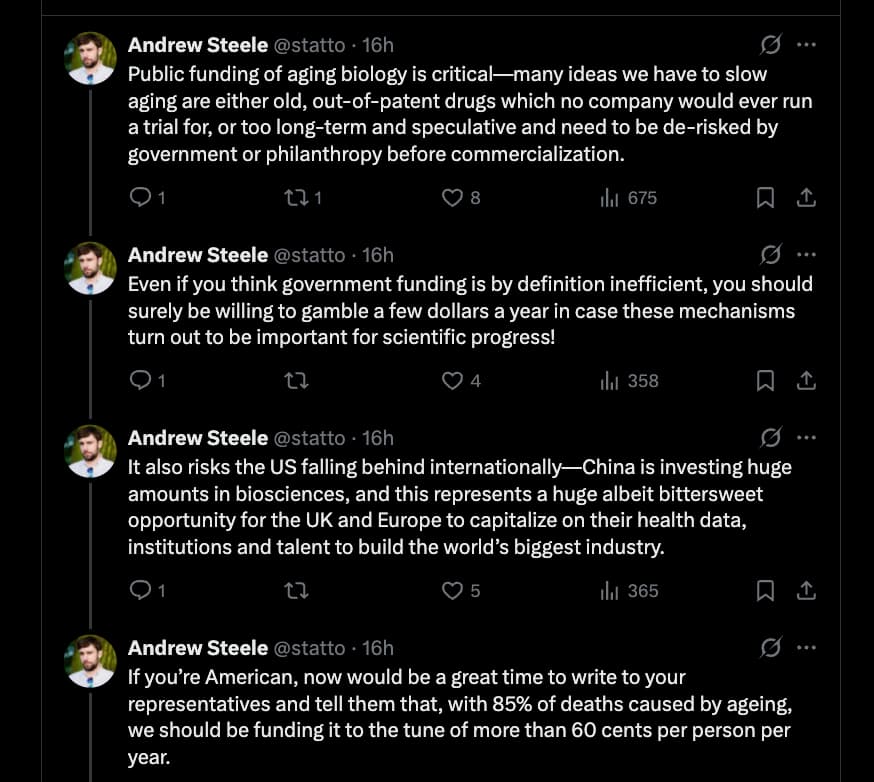
In a fresh series of posts on X, Longevity Science advocate Andrew Steele highlights a dramatic and unprecedented reduction in the proposed budget for the U.S. National Institute on Aging (NIA) for fiscal year 2026: slashing $1.8 Billion from the budget, a cut of over 40% compared to the 2025 enacted level.

The National Institute on Aging (NIA) has traditionally been the world’s largest funder of research into the biology of aging and the key funding source for most of the longevity knowledge we’ve gained over the past few decades, including the ITP’s animal longevity studies on rapamycin.

This potential funding shortfall comes at a critical time for ageing-biology research, where investment is seen by many as pivotal to unlocking therapeutics and interventions that could address multiple age-related diseases. Additionally, funding in the biotech industry has largely dried up and many longevity startups are failing and closing shop. Between drastic federal cuts, and a dramatic contraction of private investment in biotech (down approximately 80% over the past few years) we are seeing the “nuclear winter” in longevity-focused R&D. The combined effect is likely to be dramatically slowed progress in the field. Given the vast reductions in funding, we have to ask ourselves "Is this the death of “longevity”?

Source: Biotech financing: darkest before the dawn (Nature Biotechnology)

Steele notes that age­ing is the greatest underlying risk factor across cardiovascular, neurodegenerative and metabolic diseases—yet the funding trajectory appears misaligned with that risk profile. The budget reduction risks dramatically slowing ongoing translational efforts in geroscience, impairing projects targeting hallmarks of ageing (such as senescence, mitochondrial dysfunction, epigenetic drift) and delaying potential therapies that aim to extend healthspan.

The serious budget cut may undermine U.S. leadership in longevity science and slow progress in the already-underfunded field. Steele suggests that without adequate funding, the ability to scale early stage human trials, broaden biomarker platforms, and deploy population-based ageing interventions will be compromised.

The timing is also contentious since ageing research is increasingly cross-cutting — with implications for cancer, Alzheimer’s, frailty, and more.

Why it matters: If funding dries up, work on age-modifying therapies may stall at the preclinical or early-phase stage, meaning a delay in potential breakthroughs that could reshape preventive healthcare and longevity markets for many years to come. It’s also a generational impact on longevity researchers, as PHDs will be forced to leave the field and are unlikely to return; reducing the number of experts in the field who can move the science forward in the next decade. For entrepreneurs, investors and biomedical innovators (e.g., those in biotech or longevity devices), this is a strong signal to assess risk around the ecosystem supporting ageing-biology.

Bottom line: Steele’s posts serve as a warning flare: the infrastructure for ageing-research in the United States is facing fiscal headwinds. For a field that positions itself as a frontier of medicine and longevity intervention, this could slow momentum — and trigger a reassessment of funding strategy, partnership models and the pipeline of future products.


Source: https://x.com/statto/status/1990338898241970453?s=20

New Proposed NIA Budget (graphs): https://www.nia.nih.gov/about/budget/fiscal-year-2026-budget#graphs

Related: https://spotify.localizer.co/t/trump-slashed-spending-on-clinical-trials-the-toll-is-starting-to-become-clear-wapo/22224r

RapAdmin


VO2Max is one of the key drivers of health. But as people age, VO₂max declines because multiple systems degrade in parallel: cardiac output falls, vascular stiffness increases, hemoglobin can drop (if there are disease processes at play), and skeletal muscle loses mitochondrial density and capillary support. The most promising pharmaceutical and supplement strategies target these specific failure modes.

The strongest mechanistic levers—those capable of substantially slowing VO₂max decline or even increasing VO₂max despite aging—are agents that target oxygen transport or mitochondrial phenotype. HIF-PH inhibitors and EPO directly increase hemoglobin and oxygen-carrying capacity and remain the most powerful VO₂max enhancers known, though these are not practical for general use. PPAR-δ agonists and pan-ERR agonists (e.g., SLU-PP-332) reprogram muscle toward a highly oxidative, endurance-oriented state with increased mitochondrial content and improved substrate utilization; in animal models these produce large endurance gains and represent some of the most compelling future “VO₂max-trajectory” drugs.

For long-term preservation, rapamycin and urolithin A stand out for improving mitochondrial quality and turnover, reducing inflammation, and preserving both cardiac and skeletal muscle function. Nitrates, PDE-5 inhibitors, and telmisartan improve vascular function and nitric-oxide signaling, which enhances muscle perfusion and reduces the oxygen cost of exercise. NAD⁺ boosters offer modest support to mitochondrial biogenesis. Myostatin inhibitors can help maintain muscle mass and training capacity with age, indirectly supporting VO₂max if combined with endurance training.

Lower-impact adjuncts include creatine, epicatechin, citrulline, CoQ10, and mitochondria-targeted antioxidants; these provide small improvements in training capacity or mitochondrial efficiency. TMG has minimal direct effect on VO₂max but may modestly support endothelial function and training quality.

In aggregate, (and much more research needs to be done) the best mechanistic strategy might combine mitochondrial-centric agents (rapamycin, urolithin A, ERR/PPAR-δ modulators), vascular NO-axis support (nitrates, PDE-5), and interventions that sustain muscle and cardiac resilience, giving the highest probability of preserving high VO₂max into older age.

Read the full thread: Supplements and Drugs that may help maintain VO2max levels during aging?

Related: Exercise, VO2 max, and longevity | Mike Joyner, M.D

RapAdmin

If you’re a longevity doctor, or a very serious longevity enthusiast, and want to learn more about the longevity clinic market and get more contacts in this area, this is a great conference to attend.

December 6 - 8, 2025

About the event

The Roundtable of Longevity Clinics is a must-attend event for longevity-focused clinics, practitioners, businesses, and investors interested in exploring and implementing the latest longevity trends and solutions.
LOCATION : BUCK INSTITUTE FOR RESEARCH ON AGING
8001 REDWOOD BLVD NOVATO, CA 94945, USA

Details and speakers here: