Listening to music is linked to lower dementia risk, study suggests
A new study finds that regularly listening to music or playing a musical instrument may help older adults protect against cognitive decline.
Regularly listening to music is linked to a lower risk of developing dementia, according to a new study.
In the study, published in October, researchers looked at data spanning a decade and involving more than 10,000 relatively healthy people, aged 70 and older, in Australia. People who listened to music most days slashed their risk of developing dementia by 39 percent compared with those who did not regularly listen to music, the study found.
Read the full story: Listening to music is linked to lower dementia risk, study suggests (WaPo)
3 Likes
It’s not just in your head: Stress may lead to altered blood flow in the brain
While the exact causes of neurodegenerative brain diseases like Alzheimer’s and dementia are still largely unknown, researchers have been able to identify a key characteristic in affected brains: reduced blood flow.
Building upon this foundational understanding, a team at Penn State recently found that a rare neuron that is extremely vulnerable to anxiety-induced stress appears to be responsible for regulating blood flow and coordinating neural activity in mice."
https://science.psu.edu/news/its-not-just-in-your-head-stress-may-lead-altered-blood-flow-in-brain
2 Likes
A_User
#912
Is there any critical review about this study anywhere?
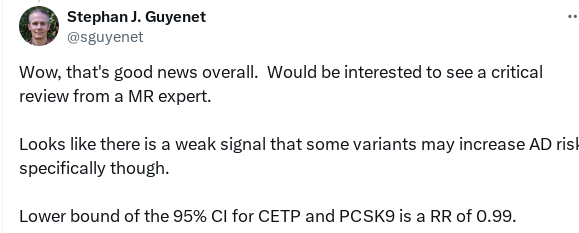
Meta-analysis of one-sample Mendelian randomization odds ratios per 1 mmol/L (39 mg/dL) lower non-HDL-C was 0.24 (0.18–0.31) for HMGCR, 0.18 (0.12–0.25) for NPC1L1, 0.97 (0.70–1.35) for PCSK9, 1.66 (0.52–5.36) for ANGPTL4, 1.41 (0.63–3.16) for LPL, and 0.30 (0.26–0.34) for CETP. Cox regression and two-sample Mendelian randomization results were mostly directionally consistent.
1 Like
@adssx I don’t think you’ve posted this yet (correct me if I’m wrong… I know you are very much on top of these studies generally).
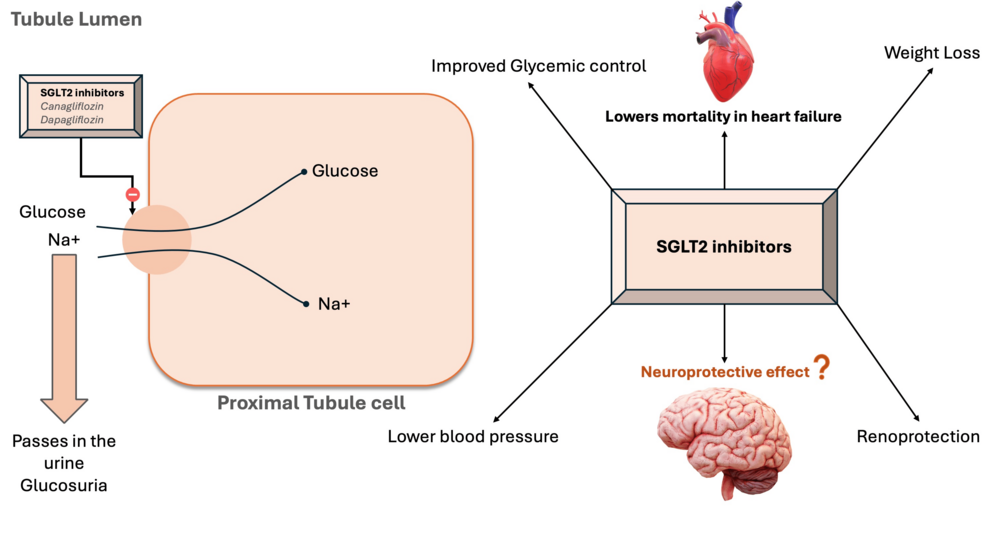
Neuroprotective Potential of Sodium-Glucose Cotransporter-2 (SGLT2) Inhibitors in Type 2 Diabetes: A Narrative Review
Once primarily celebrated for their glucose-lowering effect and their defense of the heart and kidneys, sodium-glucose cotransporter-2 (SGLT2) inhibitors are now at the center of a compelling new research question: do their benefits extend to the brain? As dementia rates climb globally, this can be linked with the rising prevalence of type 2 diabetes. With this, the search for neuroprotective strategies has become an urgent concern. This narrative review aims to navigate the current evidence to determine whether these drugs can protect patients with diabetes from cognitive decline. We uncover a fascinating dichotomy: a vast array of real-world observational data, encompassing hundreds of thousands of patients, consistently points toward a significant neuroprotective effect, suggesting that SGLT2 inhibitor use is associated with a markedly lower risk of dementia compared to other antidiabetic therapies such as dipeptidyl peptidase-4 (DPP-4) inhibitors or sulfonylureas.
Unfortunately, this promising signal is met with silence from the highest level of evidence available to us, namely, evidence from meta-analyses of randomized controlled trials (RCTs), which, although methodologically rigorous, find no such association. We attempted to argue that this result is not a contradiction but rather a reflection of a scientific puzzle shaped by the limitations of current research. Observational studies offer the necessary long-term view but are susceptible to bias, while existing trials were too short and ill-equipped to capture the long latency of neurodegeneration. Delving deeper, we explore the powerful biological reasoning for neuroprotection, which includes reducing neuroinflammation and improving cerebral blood flow, where SGLT2 inhibitors may even rescue the brain from an energy crisis by providing it with an alternative fuel of ketones instead of glucose.
The current landscape, therefore, is one of cautious optimism. While it is too soon to declare any kind of victory, the convergent evidence from real-world data and strong plausibility presents a powerful case for potential, demanding definitive answers from a new generation of focused, long-term clinical trials.
adssx
#914
It’s an Indian paper written by a student and published on a low quality website. And it’s just a narrative review. So basically it’s what ChatGPT could write. That’s why I didn’t post it.
4 Likes
A_User
#915
It’s a pretty impressive result if it replicates. Basically Statins, Ezetemibe, or Obicetrapib (if approved), would reduce dementia rates by a lot, or anything else that keeps non-HDL-C levels low for long.
There’s data related to E4 carriers in the .docx, they say it’s a similar effect.
2 Likes
The spinout company from UCSF that is doing the software used in these studies:
2 Likes
And, in the same vein… this sounds like fun
4 Likes
Bicep
#918
It’s brilliant. And probably not hard to find teachers either. Wouldn’t necessarily have to have a phd, just experience and want to do it. Old people are very decent and polite and as you can tell I’ve had good experiences with them.
Also right out of college I went to a branch of ISU and got in with a bunch of old farmers going back to school after farming for 30-40 years and they were very eager to hear the academic line of thinking. Very fun to learn with these guys, they went straight for the truth not messing around with their status. It does seem like a waste of time to teach somebody that age, but I got the sense we taught them a thing or too as well.
1 Like
When researchers examined physical activity levels, the pattern was striking. Those with the highest levels of activity in midlife and later life were 41–45% less likely to develop dementia than those who had the lowest levels of activity.
Source Paper (open access);
Physical Activity Over the Adult Life Course and Risk of Dementia in the Framingham Heart Study
https://jamanetwork.com/journals/jamanetworkopen/fullarticle/2841638
3 Likes
I’m always quite skeptical of animal models used in Alz. research because they’ve worked so poorly in the past.
Arginine supplementation curbs Alzheimer’s disease pathology in animal models
Researchers show that oral arginine reduces amyloid buildup and neuroinflammation, offering a safe, low-cost therapeutic approach for Alzheimer’s disease
In a new study, made available online on October 30, 2025, in Neurochemistry International, researchers from Kindai University and collaborating institutions discovered that oral administration of arginine, a naturally occurring amino acid and safe chemical chaperone, effectively suppresses Aβ aggregation and its toxic effects in animal models of AD. The researchers emphasized that although arginine is available as an over-the-counter dietary supplement, the dosage and administration protocol employed in this study was optimized for research purposes and does not correspond to commercially available formulations.
The research team included Graduate Student Kanako Fujii and Professor Yoshitaka Nagai from the Department of Neurology, Kindai University Faculty of Medicine, Osaka, and Associate Professor Toshihide Takeuchi from the Life Science Research Institute, Kindai University, Osaka.
In the mouse model, oral arginine significantly decreased amyloid plaque deposition and lowered insoluble Aβ42 levels in the brain. Moreover, arginine-treated mice showed improved behavioral performance and reduced expression of pro-inflammatory cytokine genes associated with neuroinflammation, one of the key pathological features of AD. These results suggest that arginine’s protective effects extend beyond aggregation inhibition to include broader neuroprotective and anti-inflammatory actions.
“Our findings open up new possibilities for developing arginine-based strategies for neurodegenerative diseases caused by protein misfolding and aggregation,” notes Prof. Nagai. “Given its excellent safety profile and low cost, arginine could be rapidly translated to clinical trials for Alzheimer’s and potentially other related disorders.”
全文:https://www.eurekalert.org/news-releases/1106825
Open Access Research Paper:
Oral administration of arginine suppresses Aβ pathology in animal models of Alzheimer’s disease
https://www.sciencedirect.com/science/article/pii/S019701862500155X
3 Likes
More Muscle, Less Belly Fat Slows Brain Aging
Researchers have found that a specific body profile—higher muscle mass combined with a lower visceral fat to muscle ratio—tracks with a younger brain age, according to a study being presented next week at the annual meeting of the Radiological Society of North America (RSNA). Visceral fat is hidden deep within the abdominal cavity, surrounding vital internal organs.
“Healthier bodies with more muscle mass and less hidden belly fat are more likely to have healthier, youthful brains,” said senior study author Cyrus Raji, M.D., Ph.D., associate professor of radiology and neurology in the Department of Radiology at Mallinckrodt Institute of Radiology at Washington University School of Medicine in St. Louis, Missouri. “Better brain health, in turn, lowers the risk for future brain diseases, such as Alzheimer’s.”
Brain age is the computational estimation of chronological age from a structural MRI scan of the brain. Muscle mass, as tracked by body MRI, can be a surrogate marker for various interventions to reduce frailty and improve brain health, and brain age predicted by structural brain images can lend insight to Alzheimer’s disease risk factors, such as muscle loss.
While it is commonly known that chronological aging translates to loss of muscle mass and increased hidden belly fat, this work shows that these health measures relate to brain aging itself,” Dr. Raji said. “It shows muscle and fat mass quantified in the body are key reflectors of brain health, as tracked with brain aging.”
For the ongoing study, 1,164 healthy individuals (52% women) from four sites were examined with whole-body MRI. The mean chronological age of the participants was 55.17 years. The researchers combined MRI imaging with T1-weighted sequences, a technique that produces images where fat appears bright and fluid appears dark. This allows for optimal imaging of muscle, fat and brain tissue. An artificial intelligence (AI) algorithm was used to quantify total normalized muscle volume, visceral fat (hidden belly fat), subcutaneous fat (fat under the skin) and brain age.
The researchers found that a higher visceral fat to muscle ratio was associated with higher brain age, while subcutaneous fat showed no significant association with brain age.
https://www.rsna.org/media/press/2025/2614
3 Likes
adssx
#928
EVOKE failed: Novo Nordisk shares plunge after Alzheimer’s drug trial fails to hit key target
The trial tested whether semaglutide — the active ingredient in Novo’s blockbuster diabetes and weight loss drugs Ozempic and Wegovy — helped slow progression for Alzheimer’s disease.
While treatment with semaglutide resulted in improvement of Alzheimer’s disease-related biomarkers in two separate trials, this did not translate into a delay of disease progression, Novo said in a statement Monday. The goal had been to slow patients’ cognitive decline by at least 20%.
Novo’s semaglutide gamble in Alzheimer’s draws a blank
The EVOKE and EVOKE+ studies enrolled 3808 participants suffering from mild cognitive impairment or mild dementia due to Alzheimer’s disease, who were randomised to receive oral semaglutide or placebo, both on top of standard of care.
Top-line results from the two-year primary analysis of the trials showed that semaglutide was not superior to placebo in reducing Alzheimer’s disease progression, as measured by the change in Clinical Dementia Rating – Sum of Boxes (CDR-SB) score compared to baseline. The goal had been to slow patients’ cognitive decline by at least 20%.
Are all GLP-1RAs useless? Or does BBB penetrance matter? @DrFraser
3 Likes
My assessment is that once disease is significantly present, it is difficult to address. Furthermore, to date there is no Mendelian Randomization review of GLP-1 Agonists and AD or PD. The challenge there, would be that the gene would also be present in brain tissue and active life long.
I appreciate the limitations of the association type data analysis, but it is the best we have currently, and I don’t think 2 years of non-statistical benefits with a GLP-1 on a process that takes at least 20 years, maybe 30 years from onset to diagnosable AD (possibly shorter for PD) makes this the trial I’m interested in.
I’d be much more interested in individuals at risk of disease starting regular GLP-1’s 20 years or more before diagnosable AD or PD would be likely (tougher to predict with PD as most have no clear genetic cause), and see if incidence is decreased. The observational data would suggest a big rate reduction.
Much tougher doing a 20 or 30 year trial for obvious reasons.
If a Mendelian Randomization process is undertaken, that would leave us with the consideration, if a positive effect were found, that we’d only have certainty on GLP-1’s that cross the BBB.
I’m not discouraged by this trial, but think it reinforces the need to pursue multiple items that work on different pathways to risk reduce likelihood of disease. I’m doing at least 10 things, of which 5 I think have pretty good evidence. Some of these will fall off and be disproven, but if 3 of them end up panning out, I’ll be happy.
9 Likes