RapAdmin
#1160
I found this story extremely surprising, given the guy’s age. I think the take-home message is to be sure to do your own regular cardiovascular risk screening; lipid panel, HbA1c, high-sensitivity CRP, lipoprotein(a), etc.
Influencer Ben Bader’s Cause of Death at Age 25 Revealed as ‘Coronary Atherosclerosis’ in Autopsy Report
Analysis from CGPT5.1:
Ben Bader
What is known: cause of death & contributing factors
Based on the autopsy and reporting, here is a summary of the confirmed details, caveats, and possible contributing elements.
Confirmed cause of death
- According to the Palm Beach County Medical Examiner, Ben Bader died of “coronary atherosclerosis due to arteriosclerotic cardiovascular disease”. (People.com)
- The death manner was ruled natural. (primetimer.com)
- Body was found unresponsive on 23 October 2025 at the gym in the private community of Admiral’s Cove, Jupiter, Florida. He had apparently just used a treadmill minutes before collapse. (New York Post)
- No significant trauma or acute drug toxicity identified. (New York Post)
- The examiner noted that genetic factors likely played a role in his early-onset atherosclerosis. (The Sun)
Key contributing/associated items
- Age: He was just 25 years old, which is highly unusual for fatal coronary atherosclerosis. (People.com)
- Reported recent physical complaints: His mother indicated he had been treated for back and shoulder pain (physical therapy), though reportedly he was otherwise “relatively good health”. (People.com)
- Exercise at moment of collapse: Surveillance footage showed him running on treadmill and appearing fine “minutes before” collapse. (People.com)
- The reports emphasise that even young people can harbor significant coronary plaque and that early atherosclerosis is increasingly recognised in younger adults. (New York Post)
What we do not know or cannot confirm
- Absence of disclosed details on other cardiovascular risk factors (e.g., family history beyond “genetic factors likely”, lipid levels, blood pressure, smoking history, metabolic syndrome, etc.).
- While he appeared fit and active, presence of atherosclerosis does not correlate perfectly with visible fitness. The degree of plaque burden or whether acute plaque rupture, thrombosis, or arrhythmia triggered collapse is not publicly detailed.
Putting it into context: why this matters
From a longevity/health-span viewpoint, this case highlights several important lessons:
- Young age alone is not protective from advanced coronary artery disease. Autopsies in younger adults increasingly show significant plaque burden.
- Atherosclerosis often begins silently decades earlier; visible fitness or apparent health doesn’t guarantee absence of pathology.
- Genetic predisposition may accelerate plaque formation—family screening becomes relevant.
- In someone presenting with relatively minimal symptoms (back/shoulder pain only) and apparently normal activity, cardiovascular screening may still be warranted if risk factors exist.
Diet & lifestyle speculation (with caveats)
- Given his influencer persona (lifestyle + fitness advises), one might infer he engaged in regular exercise and possibly tracked nutrition—but there is no documented account confirming his macro/micronutrient intake, supplementation, or caloric surplus/deficit.
- Cardiovascular disease in a 25-year-old implies unusually rapid progression of plaque. Diets high in saturated fats, simple carbohydrates, low in fibre, or with systemic inflammation could accelerate this, but we have no evidence whether he had these exposures.
- Chronic subtle inflammation, insulin resistance, dyslipidaemia, hypertension or smoking—all accelerate atherosclerosis—but we have no public data to confirm or deny these in his case.
- For applied take-away: in any young adult (especially under 40) engaging in heavy training or visible fitness, obtaining baseline cardiovascular risk screening (lipid panel, HbA1c, high-sensitivity CRP, lipoprotein(a) if family history etc) is prudent.
Summary
- Cause of death: coronary atherosclerosis / arteriosclerotic cardiovascular disease, natural death. (People.com)
- Contributing factors: extremely early onset—genetic predisposition likely, he was apparently exercising right before collapse, otherwise apparently healthy.
- Unknown: Specific diet, detailed biomarkers, lifestyle factors such as smoking, exact plaque burden or mechanism of sudden collapse.
- For longevity specialists: This emphasises the stealth of subclinical coronary disease and the importance of early screening, even in apparently healthy young adults.
2 Likes
A_User
#1161
This is a wild result, and I wonder about the implications. What about people who don’t have more weight to lose, and if other risk factors are controlled? Would some oral GLP-1 agonist weak on weight loss have synergistic or additive effects with other treatments and risk factor control? I.e that it will be normal to take such a drug in addition to other treatments.
2 Likes
I have no idea who this person was, but at 25, it is most likely familial hypercholesterolemia. Very sad, because this death was entirely preventable.
I have the heterozygous form, with one copy of the bad gene. My LDL-C is around 220mg/dl when untreated. A person with homozygous (2 copies) can easily have LDL-C of >400mg/dl.
This is exactly why I tested my kids, and one of them, when aged 6, had an LDL-C of ~150mg/dl. She will start treatment so that she can avoid a fate like this guy.
2 Likes
A_User
#1164
He probably had a blood test many years ago, and then learned on YouTube that “LDL cholesterol doesn’t matter”. “LMHR”, I’m not sure if it would make a large difference, but it could. If you test high randomly that isn’t recently induced that means you’ve had it for long.
Rick
#1165
The only way to know what your arteries look like is to have a catheter angiogram. Very few people have this procedure because it is invasive. I had an MI and required 2 stents to open 80 and 90% blockages so now I have a picture of what my arteries look like.
2 Likes
A_User
#1166
It’s not surprising there are natural factors in everyone that cause atherosclerosis if most people had lower CVD risk in the past. Few had hypertension, obesity, type 2 diabetes, were inactive, modern apoB levels from eating saturated fats from dairy products and domesticated cattle. Nowadays people are loading up for dinner or even three times a day of processed butter, dairy, and fattened up cattle or pigs. The same people even think we falsely believed they were unhealthy!
Beth
#1167
CCTA w/ CLEERLY
I haven’t seen much about this lately, but I have a question for those of you who are in the know.
My cardiologist’s office called and they wanted to schedule me for a stress test/echo. There is nothing new going on with me. This is just my ol’ elevated risk due to my high CAC score from a decade ago.
It would be 3k to do the stress test. I’m not inspired to spend 3k when I have no symptoms, but maybe this is the prudent thing to do?
If I’m going to do anything, it makes me want to reconsider getting a CCTA w CLEERLY, an idea I shelved last year.
My two main questions are:
-
We know that CLEERLY does a better job than a CCTA alone on those who have a high plaque burden. But does it do well enough that it’s worth doing? AI says it’s better but it’s still an issue.
-
Lastly, what am I missing out by doing the CCTA w/ CLEERLY over the stress test echo. (I did google and it seems CCTA doesn’t look a the strength of your artery wall, but I don’t know how important this is).
Any thoughts would be appreciated.
PS, I’m fully medicated and my ApoB is in the 40s. This is why I scrapped the CCTA idea last year because it seemed it was more for curiosity than for an action plan.
1 Like
Kelman
#1168
In my experience (with family members) this is useless. Someone in my family had it done and they passed it with flying colors (test/echo) to then have CCTA scan couple weeks later (the one they put die in one’s veins) and his arteries were really clogged (one 65%, one 55%, and another one 30%). so, if I were you, I’d save $3k and opt for CCTA about $400-$500.
4 Likes
Bicep
#1169
Yeah, I’m doing the Cleerly this year… actually next year but soon. Dr. agreed to prescribe the CCTA and Medicare is supposed to cover Cleerly. I just signed up for medicare but haven’t gotten my card yet. I’ll let you know if this works. I’m just guessing but doesn’t it seem like if Medicare covers it then so should insurance? Not all insurance is equal.
3 grand for a stress test is robbery. I pay less than $2000/year and get 4 pretty complete labs/year and one stress test. He throws in a bunch of other crazy tests once a year that I haven’t figured out, and once you hit medicare you get Boston Heart evaluation. But I live in the sticks.
1 Like
LukeMV
#1170
The echocardiogram is really designed to detect heart abnormalities (enlargement, leaky valves, etc) so it is very useful for that. No one is getting it to detect plaque or anything.
5 Likes
Kelman
#1171
Ah, I see. Considering that the main reason for silent killer events (as it is called) seems to be the buildup of plaque then I’d assume the better option would be CCTA. Anecdotally, again (have an uncle with irregular heartbeats, don’t know the medical term for it though) but that is something which manifest itself in one way or the other. In other words, if you had a heart abnormality most likely than not you will know very early on. My uncle is in some kind of medication (sorry never asked him) since in his early 20’s and is now 87. So, in context of what @Beth was asking about, I still think she would be better served with CCTA (much cheaper and more appropriate if you have no known symptoms of any CVD) than what the doctor suggested to her (especially considering the steep cost).
2 Likes
A_User
#1172
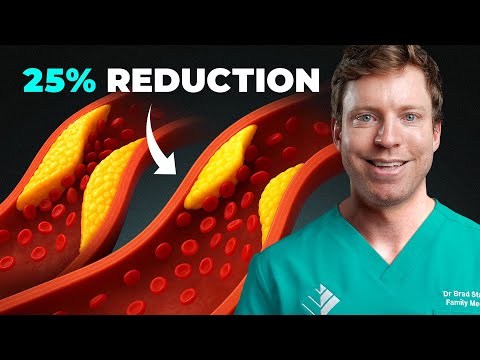
Wow. Brad has really upped the quality with in-depth videos like these. Here about PCSK9(i).
Unfortunately prevention is niche, people don’t even know it’s possible for real either I presume, so it won’t be viewed by hundreds of thousands.
7 Likes
KiwiGuy
#1173
I went directly to CCTA (skipping Stress test and CAC Score). My reasoning was those tests could easily miss underlying pathology and give me a falsely positive results. The CCTA found a blockage which those tests likely would’ve missed (I had zero calcium score, it was 100% soft plaque). Interestingly I submitted my CCTA files to Cleerly for verification and Cleerly didn’t find anything at all. The issue is that Cleerly ignores smaller vessels and my plaque was in my D2 (a fairly minor artery). The Cleerly report said I didn’t even have a D2 (in reality, their AI had just ignored that vessel presumably because it was below their minimum size to analyse). I think on average Cleerly is great, but in my particular case, the humans were better.
3 Likes
Beth
#1174
This is really interesting feedback, so I’m glad you shared this.
Did you send your CCTA results to clearly yourself? Or your doc did? I’m just trying to figure out what the options are… the two step process vs going to a Cleerly approved center (few and far between).
This makes me wonder if one goes to a place that automatically uses Cleerly, is there a human who also looks at the results? If not, the two step process, as you did, seems more advantageous because you’d get what Cleerly has to offer, AND you would also get what Cleerly might miss, as happened in your case.
1 Like
KiwiGuy
#1175
I live in New Zealand, so had a normal CCTA done here (with humans). For the Cleerly analysis I had a Cleerly-aligned USA-based Doctor who arranged the Cleerly referral and billing. Once that was complete, my NZ radiology provider transferred my CCTA data files directly to Cleerly (this process was smooth for me and only entailed sending an email to authorise the transfer).
3 Likes
Bicep
#1176
To clarify, normally the people who do the CCTA have a guy that looks at it and gives his opinion. Then the images are sent to Cleerly (there are others with AI too, but this is the one we’re talking about) and they add their opinion.
2 Likes
RapAdmin
#1177
Have you done Cleerly already?
Bicep
#1178
No, I’ve emailed them and gotten the particulars. I’m waiting for my medicare card, then I’ll talk to them about that and get it done. I’ll post here if it happens.
2 Likes
I did it (CCTA w/Cleerly) recently. I was interested in seeing the status of OM2 (among others) which about 15 years ago was deemed 99% plugged!! This time it was clean as a whistle! There was plenty of plaque, distributed with the bulk being hard plaque, a spot or two around 70% blocked. Since my LDL at below 20 and APOB around 37 are at levels where presumably new plaque will not be deposited I am not perturbed. I am going to resume Nattokinase, Serrapeptase and Lumbrokinase after the New Years, have been on them for over a year. At 67 I have to expect issues. Testing gives me visibility on actions to take and effects of prior actions!
6 Likes
Tilmitt
#1180
I finally got a blood test and wanted to share the results, which are looking quite good. Unfortunately I don’t have any values from before I started self administering drugs.
Stack prior to the test:
Pitavastatin: 2mg
Ezetimibe: 5mg
Bempedoic Acid: 90mg
Aspirin: 81mg
Metformin: 1g
Rapamycin: 5mg (once a week)
Triglycerides: 39 mg/dL
HDL: 58 mg/dL
LDL: 46 mg/dL
5 Likes